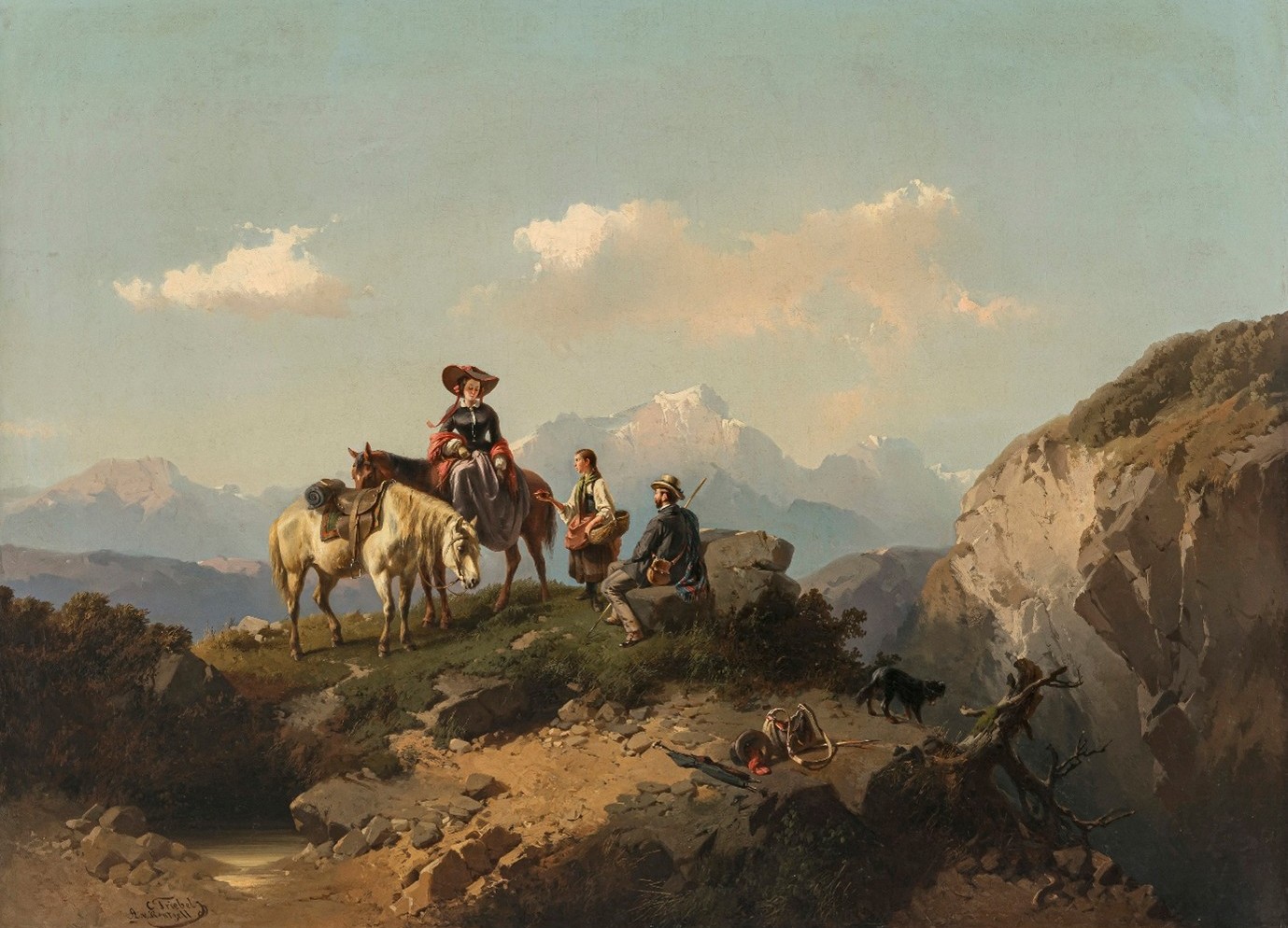
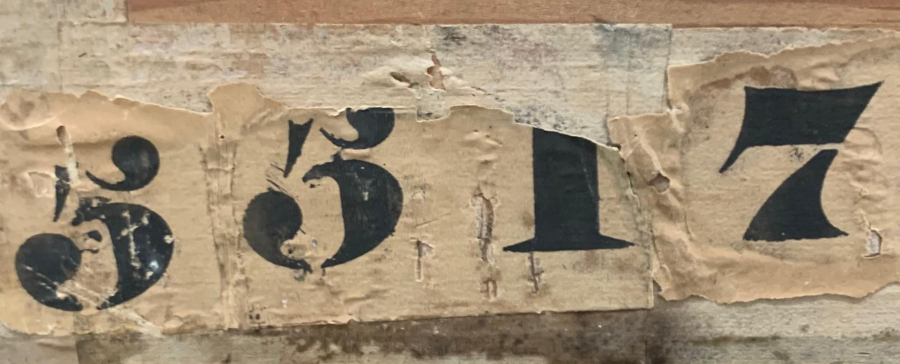
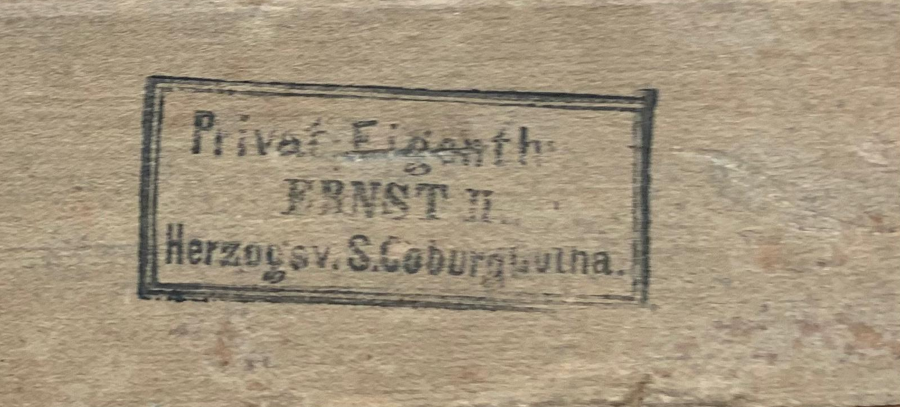
Provenance: Commissioned by Duke Ernst II Herzog von Saxo-Coburg Gotha (1818 Coburg – 1893 Friedrichroda). Henceforth owned by the Saxo-Coburg Gotha family (stamped on the stretcher, verso “Privat Eigenthum ERNST II. Herzogs v. S. Coburg Gotha”, with inventory stamps “5517” and “96”, see figs. 1 and 2). Remained at Callenberg Castle until 2025.
fig. 1 – Detail of inventory number. |
fig. 2 – Detail of stamp. |
Among the myriad stately
portraits of Queen Victoria (1819-1901) and Prince Albert (1819-1861), and
among the other portraits of royals which would have hung alongside this at
Callenberg Castle, this painting offers a far more intimate and personal glimpse
at the royal couple. And this intimacy is present not just in their “dressed
down” appearance, but in the painting’s own sitz im leben – as a private
commission from a close member of the family, and never before seen outside of
this private, aristocratic space.
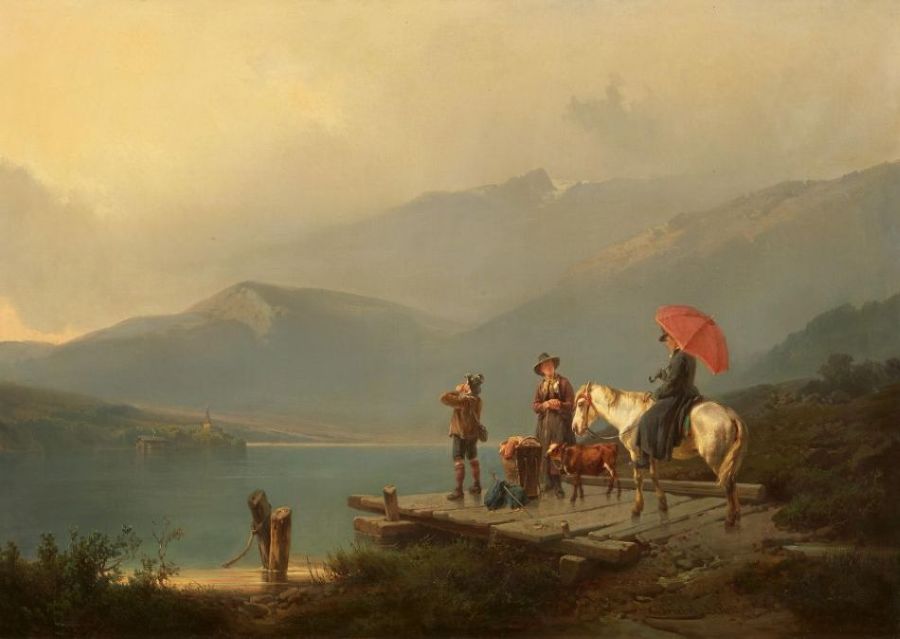
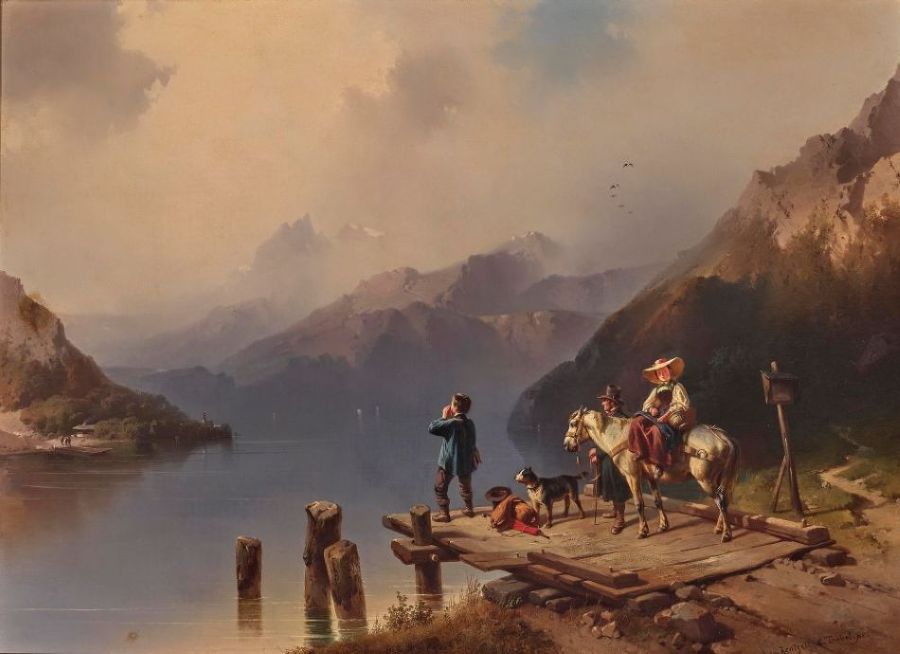
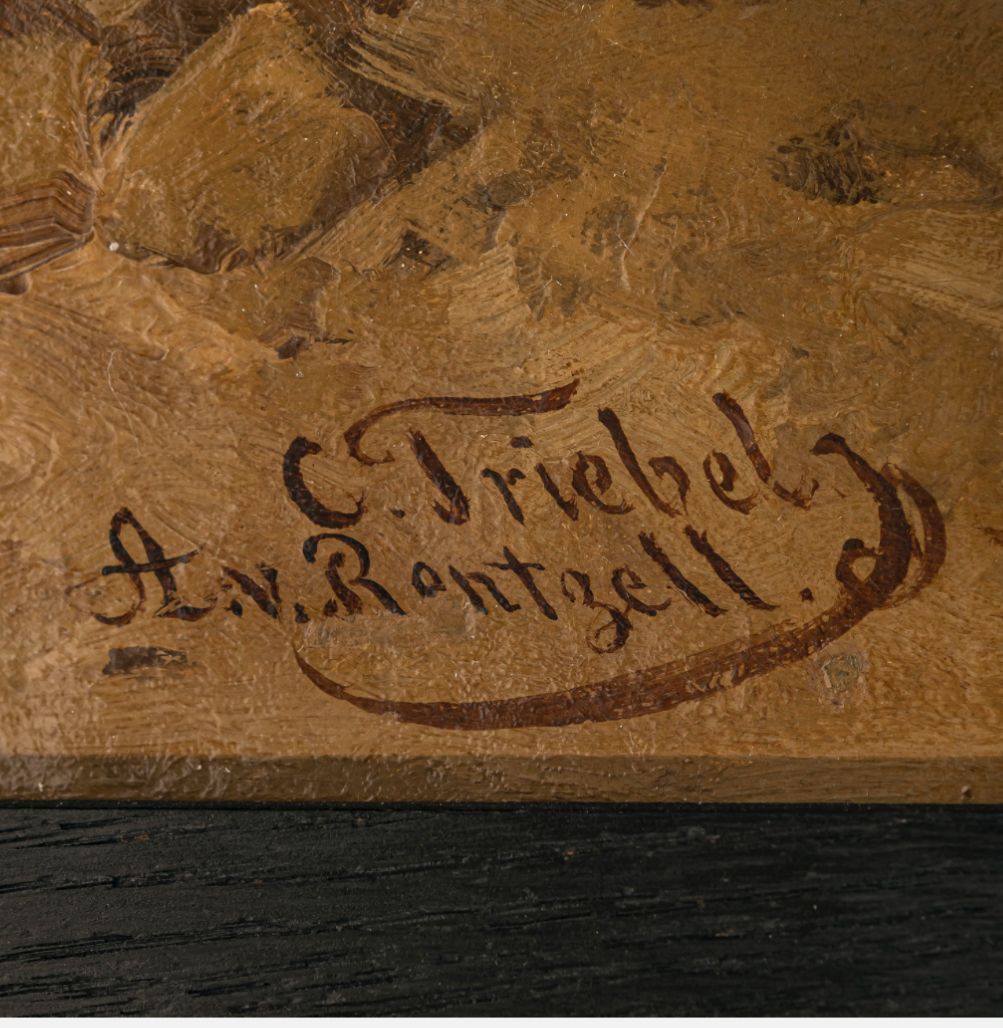
Duke Ernst II commissioned this imaginary scene from Triebel and von Rentzell, two well-known genre painters of the time: the former painting the landscape in the background, the latter completing scene of the resting couple and girl in the foreground. Triebel and von Rentzell had previously worked together on at least three other large genre scenes. The composition of two such paintings is almost identical (figs 3 and 4), with an adult couple, one on horseback, and a shouting child on the banks of a mountain lake. In one, the adult couple is relatively undifferentiated, ambiguous (fig. 3), whereas, in the other, von Rentzell has described detailed likenesses (fig. 4) – the horseback woman even gazing directly outward. This might imply that Triebel and von Rentzell were often commissioned to paint their patrons into compositional patterns. Our painting, however, appears to be sui generis, not based on some earlier model. This was certainly important commission for these two artists given their patron’s royalty, and accordingly both artists have provided elaborate and prominent signatures in the bottom left.
fig. 3 – Carl Triebel and August von Rentzell, “‘Hold Over!!’ at Lake Achensee”, Oil on canvas, Van Ham. |
fig. 4 – Carl Triebel and August von Rentzell, “On the Shore of a Mountain Lake”, Oil on canvas, Neumeister. |
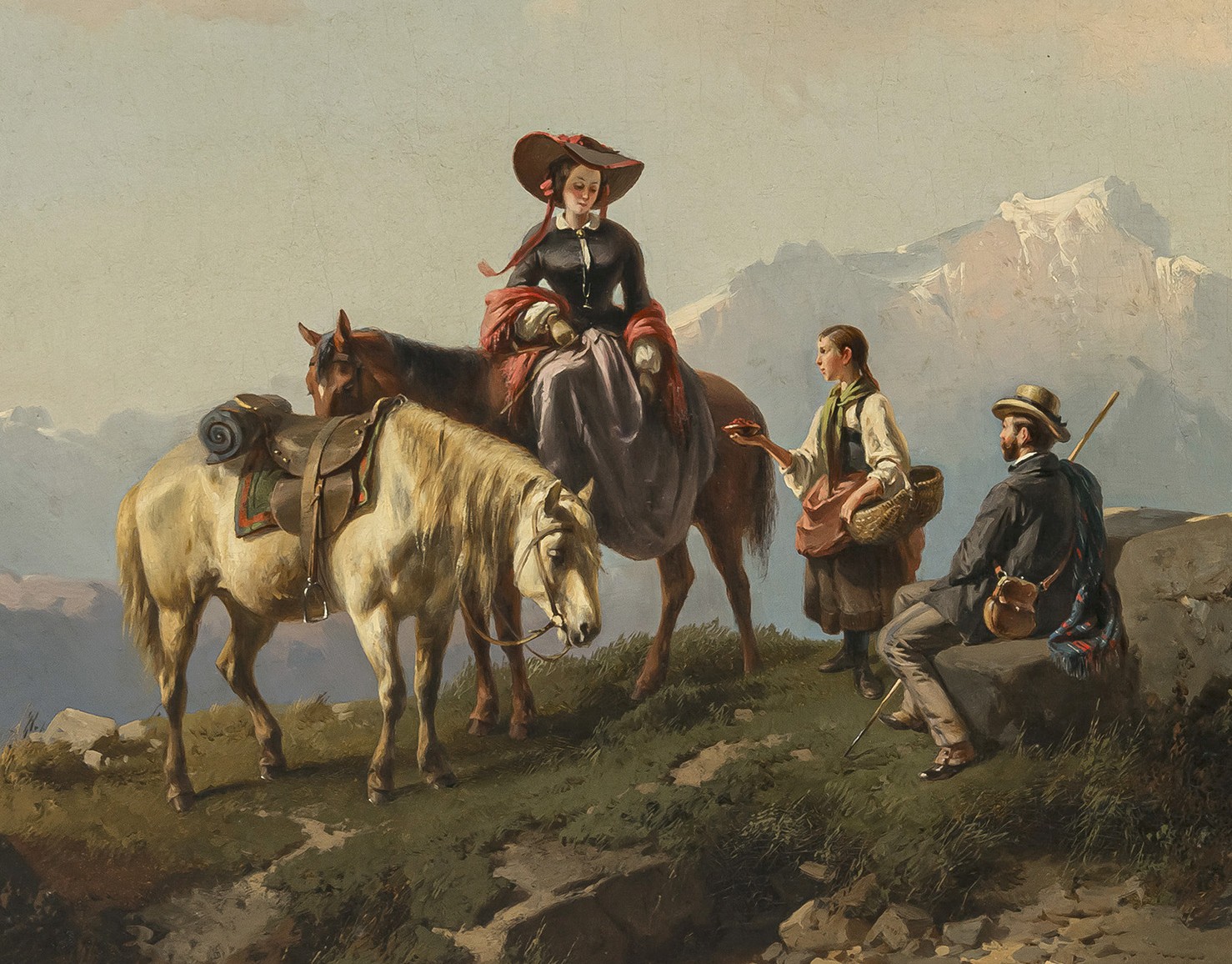
In
this serene scene, a trio and their horses form an idyllic tableau against wide
and sunlit peaks, triangularly composed, contrasting the dark and compact
foreground with their bright surrounds. In the very foreground of the painting,
von Rentzell has included his own gear – hat, bag, umbrellas for shading his
own canvas for prolonged plein-air painting. This is, of course, a conceit –
the royal couple never sat for him, the landscape behind is likewise presumably
imagined. However, the inclusion of naturalistic details not only gestures to
the effortful craft which of which this painting is the product but goes
further to materialise Ernst’s dream. To the right, a dog staring into the dark
precipice below provides gives a sense of treachery and levity to an otherwise
sentimental scene. In the centre of the painting, beautifully rendered young
girl offers berries to the Queen – from Ernst II’s perspective demonstrating
loyalty and innocent and generous service. Given the averred date of the piece,
the girl with berries may also symbolise a wish for continued fertility for the
young couple who would have nine children between 1840 and 1857.
It
is not just simple resemblance alone which hints at the true, royal identity of
the sitters, though their resemblance to contemporary portraits of the Victoria
and Albert is striking. The figure resembling Victoria is strikingly softer,
more “dressed down” than the austere royal portraits we are accustomed to
seeing. This might reflect the more intimate context of this painting. As a
private commission – one which was probably never even intended to be viewed by
the English royals themselves – we may here see a more personal, almost
subjective view of the Victoria and Albert. That said, the almost
iconographical, shorthand rendering of the monarch’s face still maintains a
level of decorum in an otherwise forthright painting.
Ernst II was
Albert’s elder brother and remained a close confidant of the couple until at
least the year of his brother’s death. Indeed, Ernst had presided over their
early romance, accompanying his younger brother on his first two trips to
England. The arts were a passion shared by the royal couple and Ernst II – in
their time, all great collectors of art of all disciplines and periods. Ernst
was known as a great patron in Coburg, a sensibility shared by Albert, and one
continued by Victoria long after her husband’s death. As an object of note in
the history of Ernst II’s collection, this painting stands as an example of the
sorts of works which were thought popular and tasteful for a royal court to
commission of contemporary, commercial artists.
A rift had privately formed between Ernst and the royal couple around 1860 over the former’s objection to the marriage of Edward VII (to be) to the Princess Alexandra of Denmark on political grounds. However, the death of Albert in December 1861 marks a tragic inflexion as, though it helped Ernst a chance to reconcile with his sister-in-law, it also robbed Ernst repair his relationship with his beloved brother. Writing to her eldest daughter, Victoria described the bereaved Ernst as in a ‘wretched’ state. It is possible that this painting may have been commemorative – commissioned after Albert’s death, imagining a peaceful reconciliation on home soil.
fig. 5 – Carl Haag, “Morning in the Highlands: The Royal Family ascending Lochnagar”, 1853, Oil on Canvas, Royal Collection Trust. |
fig. 6 – Robert Thorburn, “Prince Albert”, 1852, Watercolour on ivory laid paper, Royal Collection Trust. |
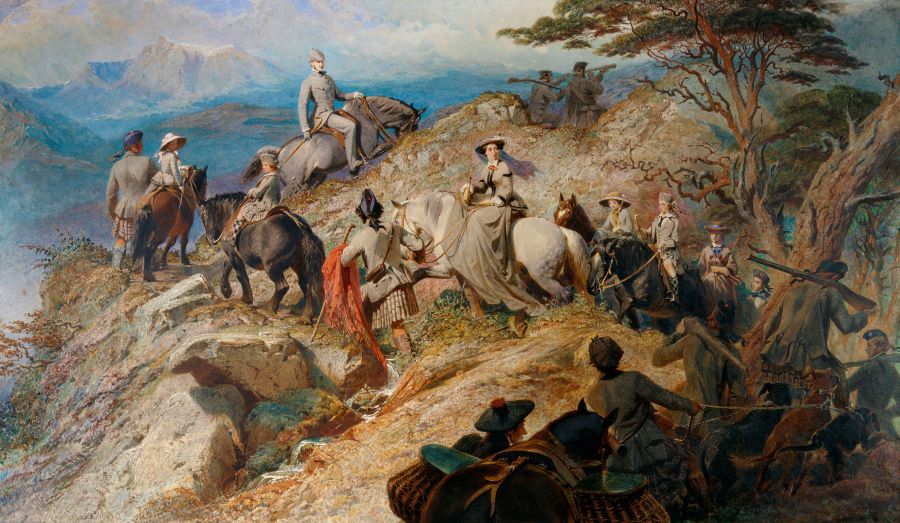
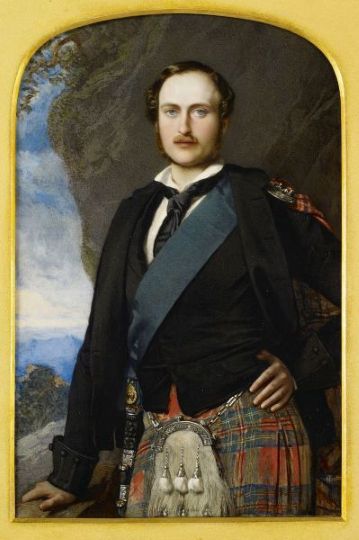
Images of
Victoria and Albert on similar outdoor excursions are fairly common (see fig. 5),
and the couple spent much time in the Scottish Highlands – here, of course,
transposed to the Tyrolian Alps, something more to Triebel’s style. Albert,
however, still wears a fashionable tartan sash – a style which he seems to have
picked up some time around his first visit to Balmoral in 1848 (see fig. 6).
Victoria, herself, never made it to the Alps with Albert, but made the trip in
1868, following the footsteps of a trip her husband made in 1837. Ernst II,
too, had affection for this region: he owned a hunting lodge in Hinteriss,
Tyrol. There is something quite poignant about this intersection of worlds –
this painting materialises Ernst II’s wish to close the distance between
himself and brother’s family through the pictorial imagination.
P.O.R.