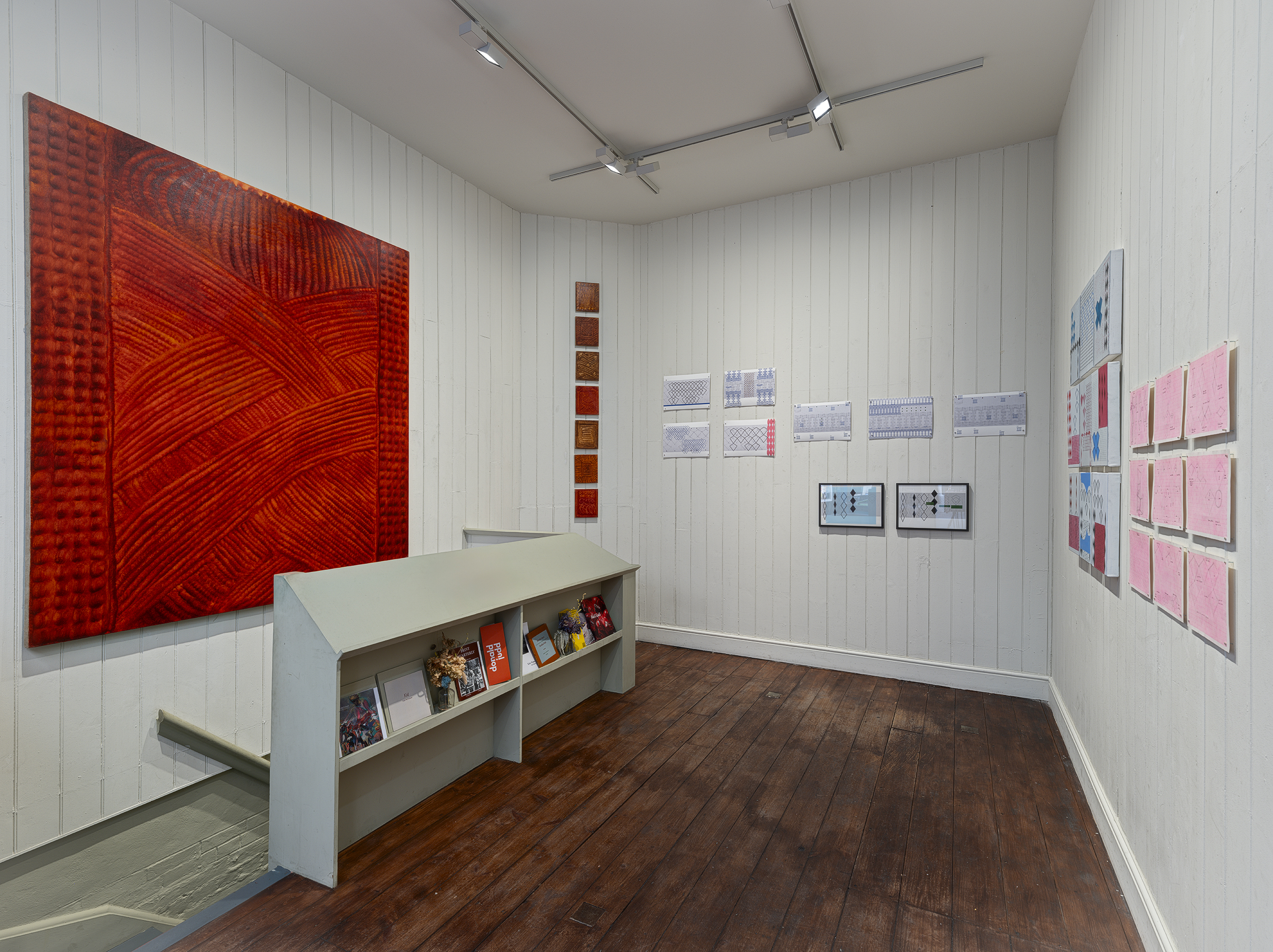
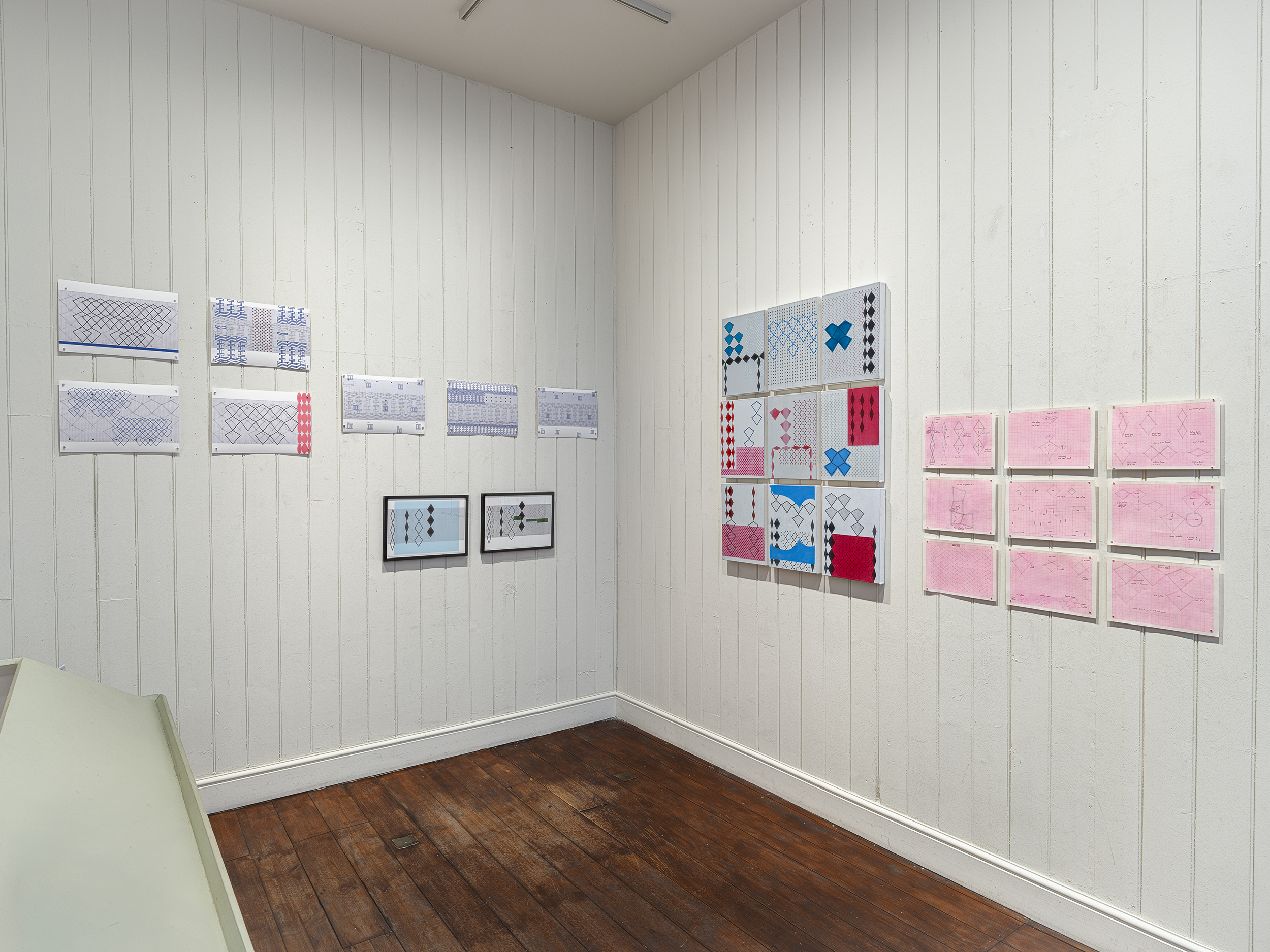
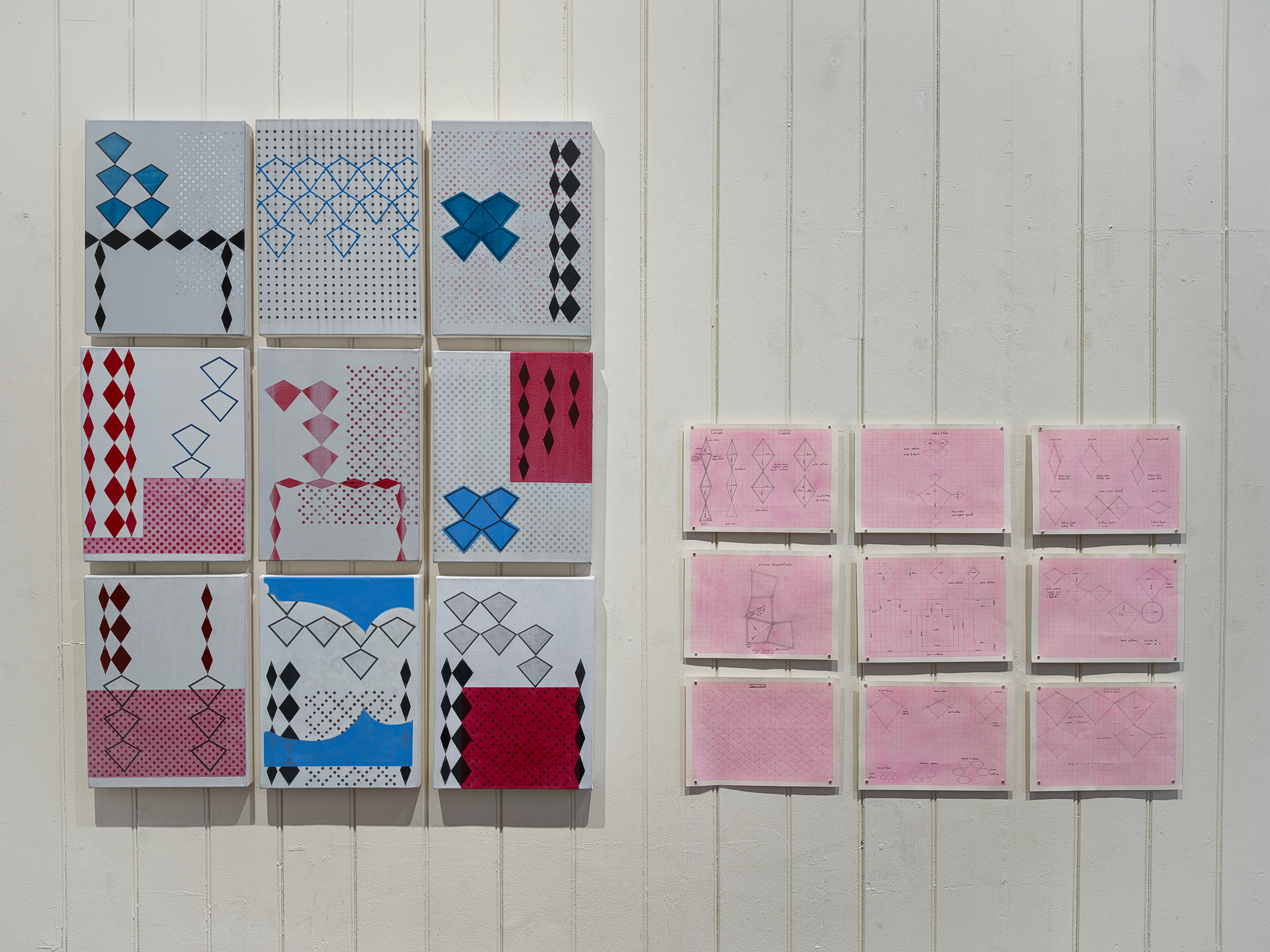
“Patterns of Harmony” places contemporary artworks in creative dialogue with crafts heritage to explore the laws governing the properties of the point, line, plane, and solid. Geometry was one of the Seven Liberal Arts studied at Plato’s Academy and the advances made by Greek mathematicians like Euclid are well-known. However, the geometric principles they codified were instantiated long before their time in artworks and buildings elsewhere: the pyramids of Egypt, the Lo-Shu diagrams in China, and ancient fire altars in India. Geometry, in fact, reflects the creative energy of the cosmos following the harmonious interaction between straight line and curve, crystalline and biomorphic. In every culture, traditional artisans have used basic geometric principles and transformed them into complex, sophisticated arrangements and architectural forms, expressing their own patterns of harmony.
The juxtaposition of such remembered crafts heritage with the contemporary art practices gives new perspectives on both, revealing the essential patterns that energise fabrics’ colours, and showing the shimmering light and deep colours of the paintings’ lines. Though patterns are formed in the mind, their sources lie outside of us – in the visual rhythms on our crafts and in photons of light which reflect them. The concordances or harmonies through which we identify patterns may be discovered in the mind, but geometry reminds us of the physicality of this truly incarnational art, which unites transcendence and immanence, as lines form Patterns of Harmony.
| MAGDA BLASINSKA’s (b.1983 in Ilza, Poland) lines are a reminder of the underlying ripple patterns that activate and energise a rug’s surface, and the grid of individual knots that make up each piece. | ADIA WAHID’s (b. 1971 in Karachi, Pakistand) patterns of bricks seem to dissolve the architectural surfaces of the places into an energised space of constant movement, reminding us of the abstract patterns of Islamic art. |
About the curator:
Elisabetta Bresciani (b. 1968 in Brescia) is based in Venice and London and
trained as an Art Historian specialising in Cultural Anthropology. She has
spent nearly thirty years as a curator and scholar of cultural heritage,
initiating projects with a cross-disciplinary approach. She is especially
interested in organizing exhibitions at unusual venues, combining contemporary
art with historic sites, such as the (then) Prince of Wales’s Charitable Trust
in Transylvania, the Imperial Carriage Museum in Vienna, the Sigmund Freud
Museum in London and the Benedictine Abbey San Giorgio Maggiore in Venice.